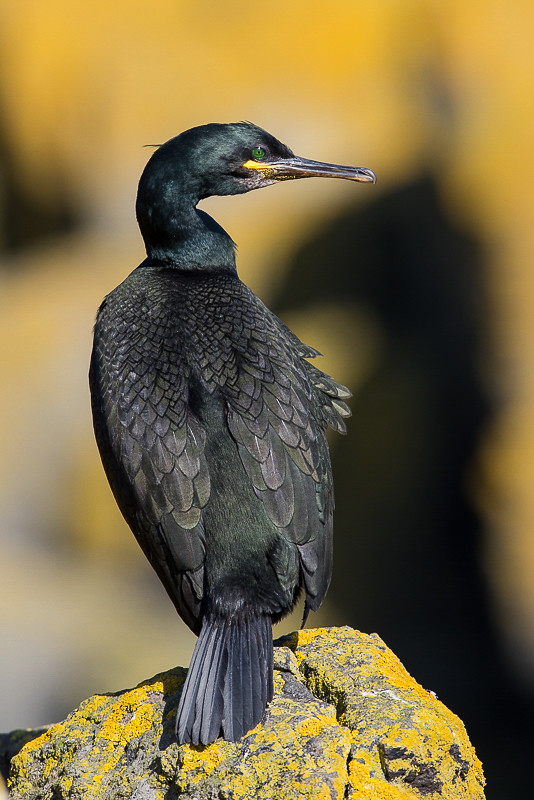
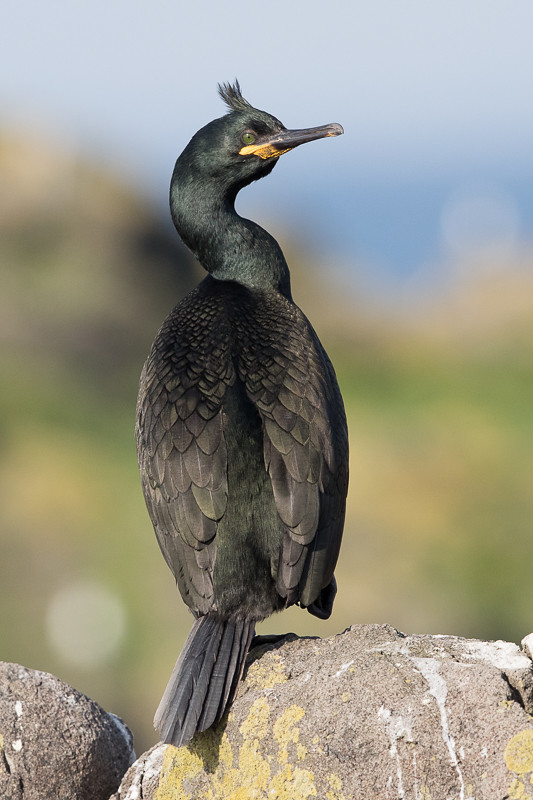
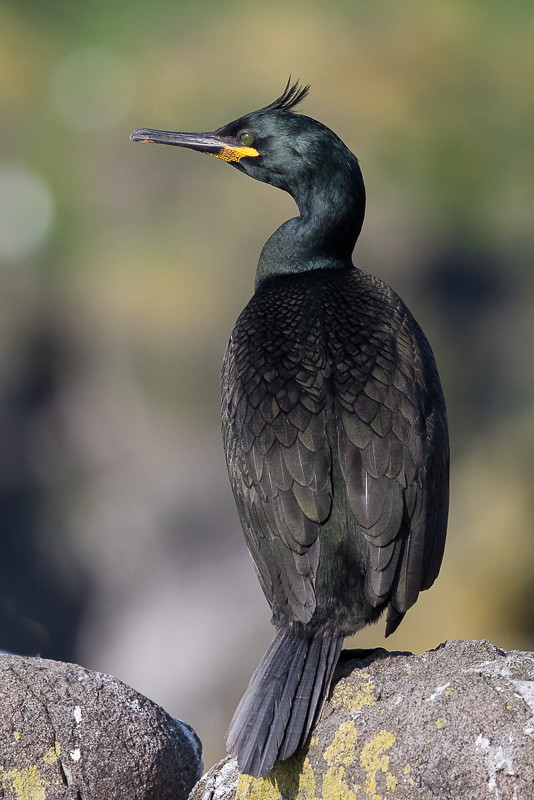
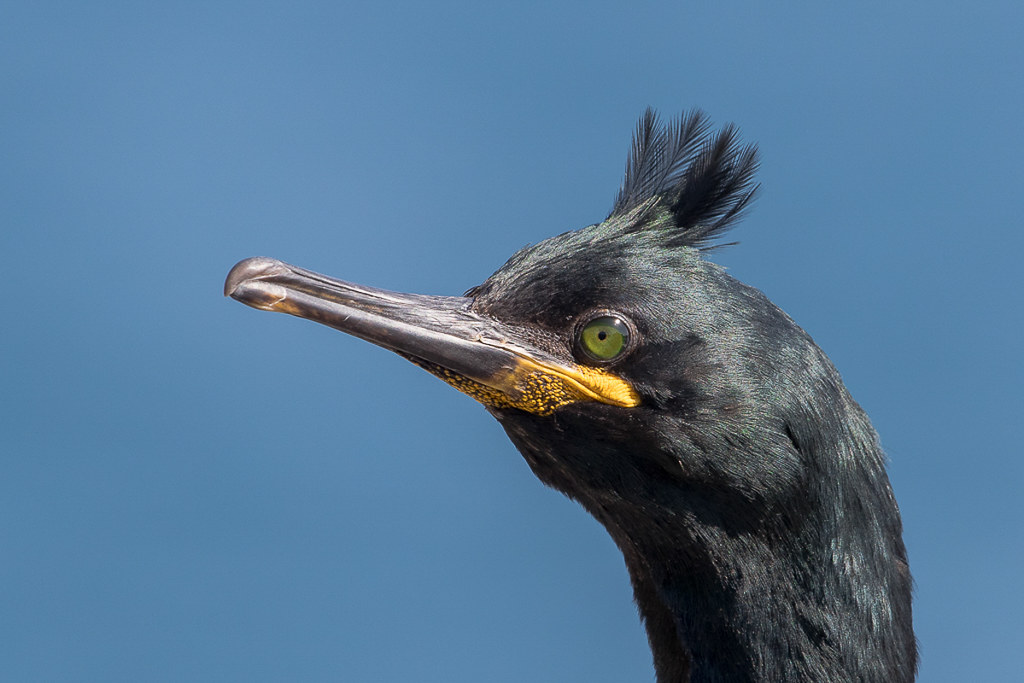
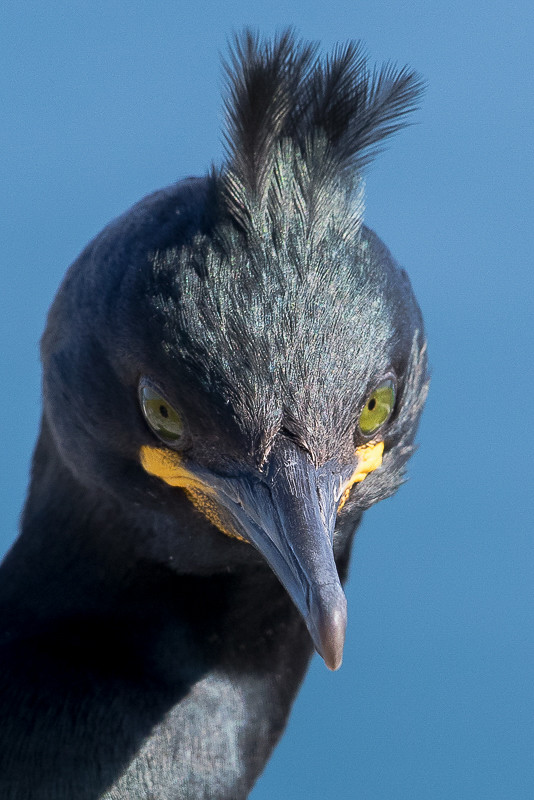
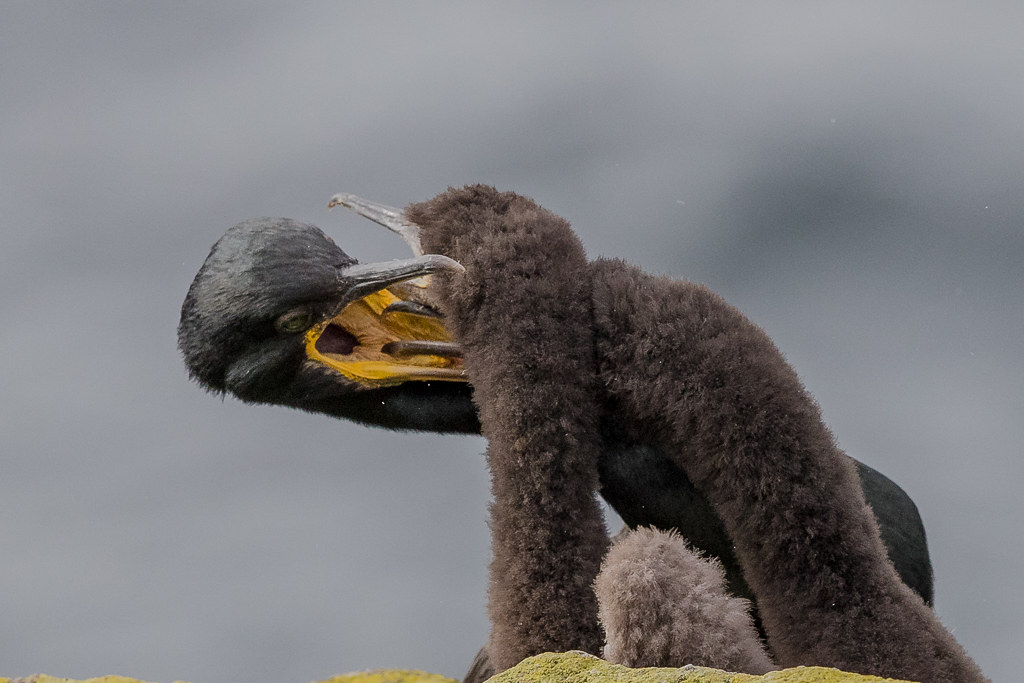
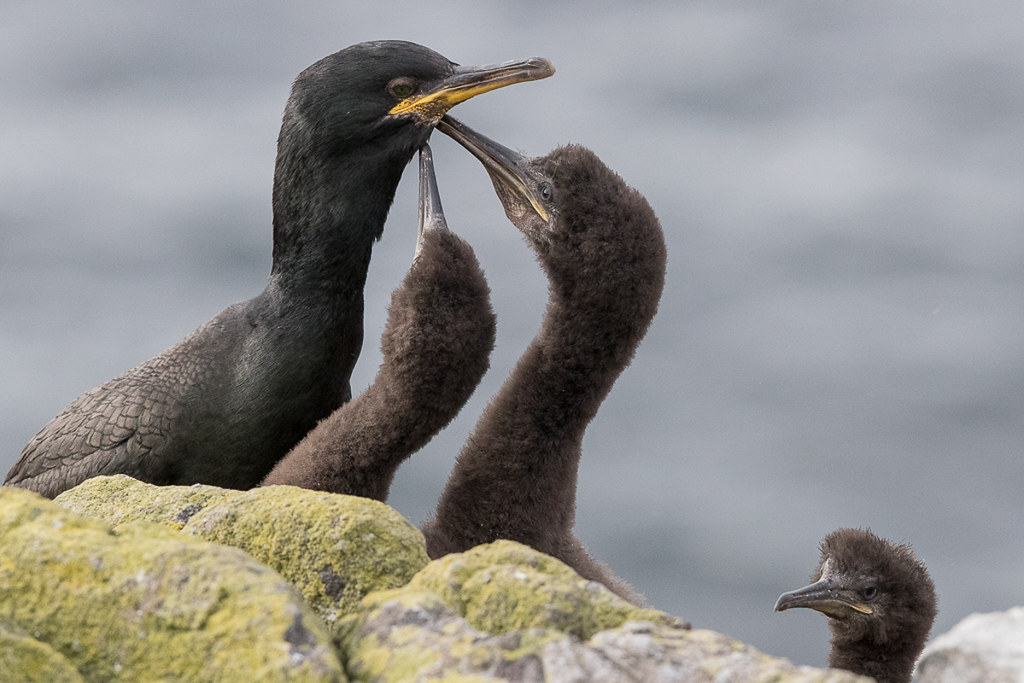
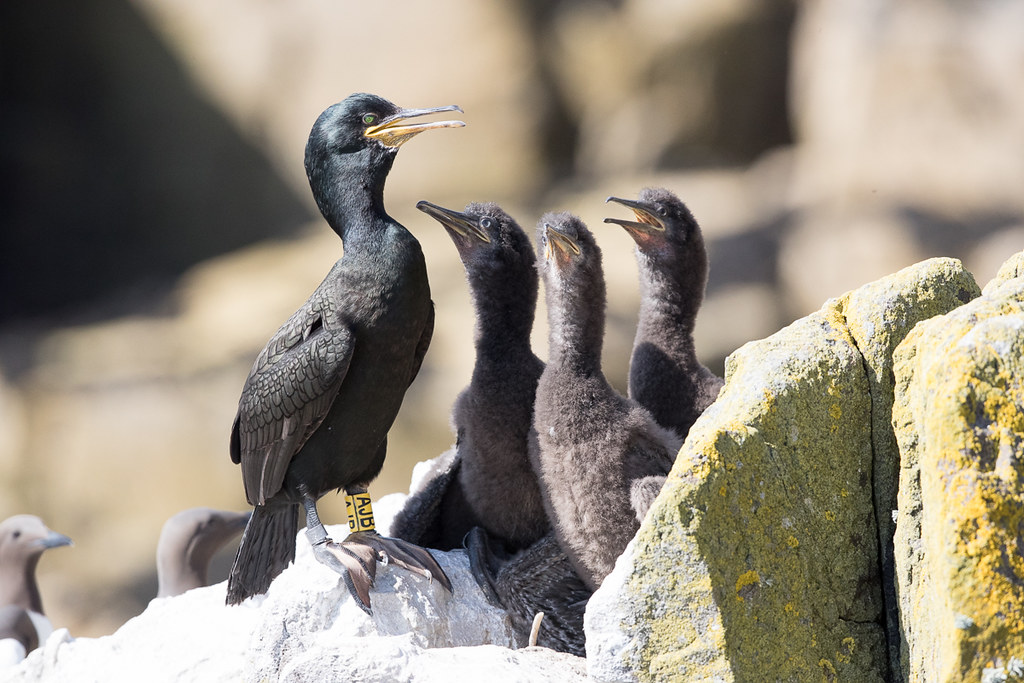
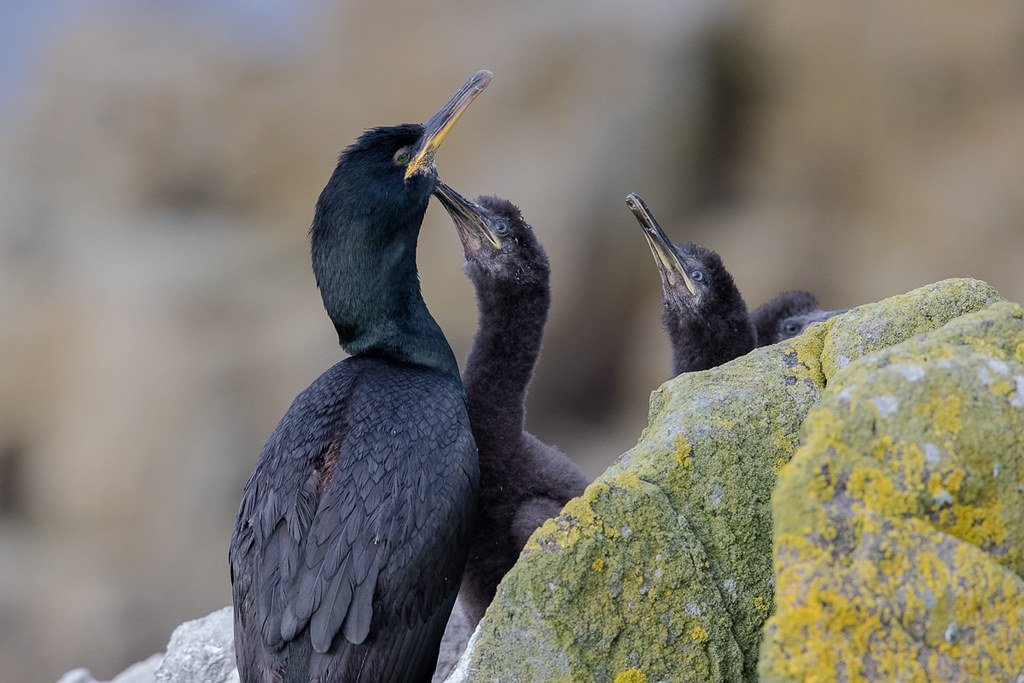
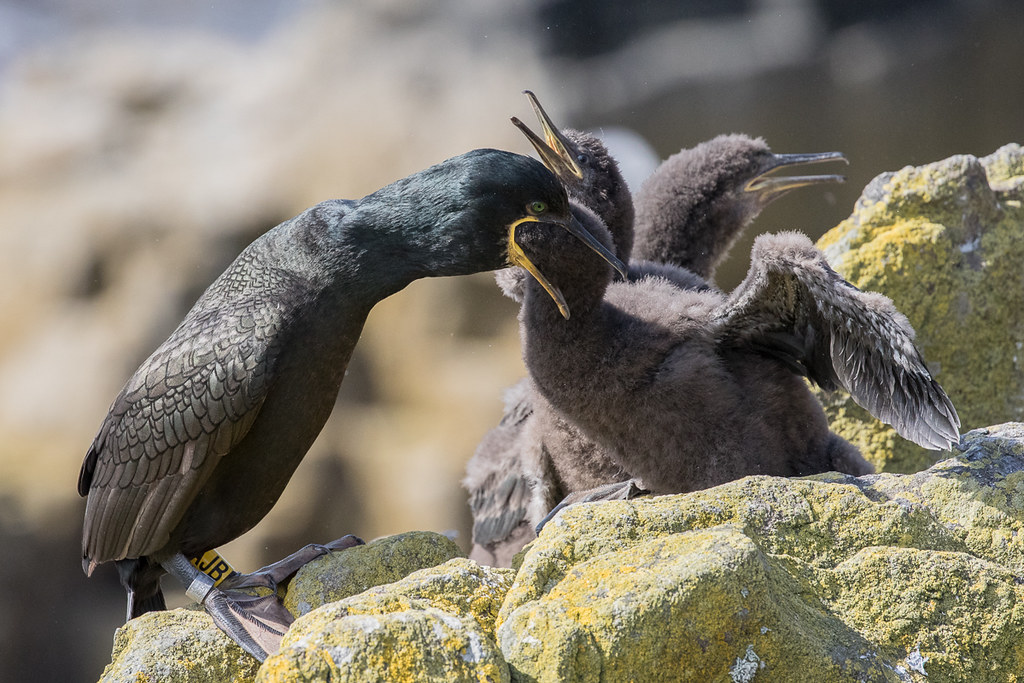
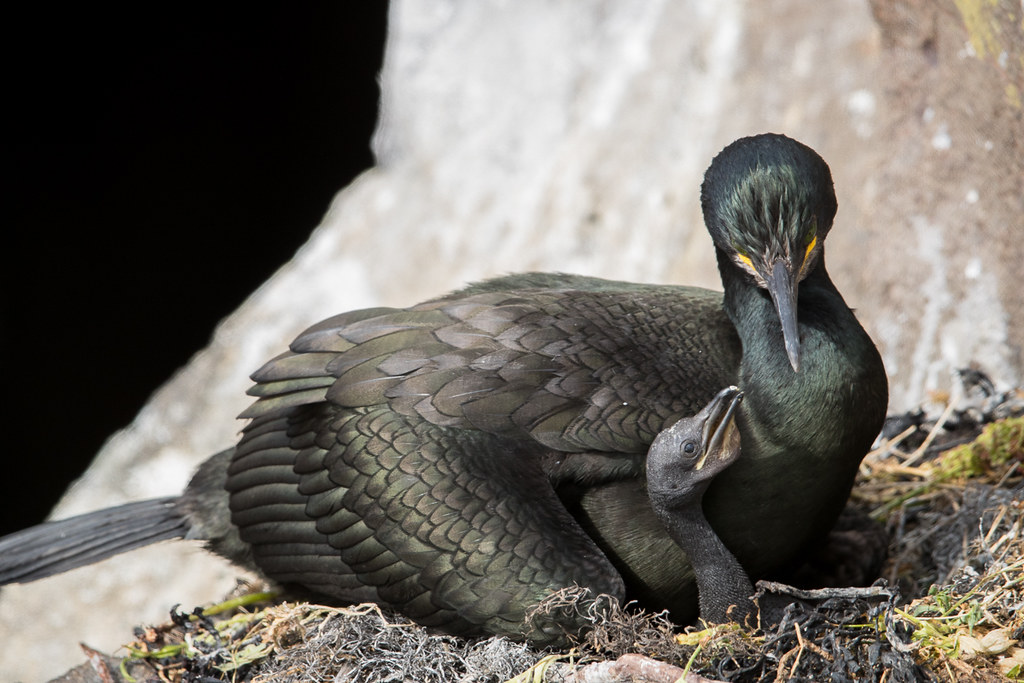
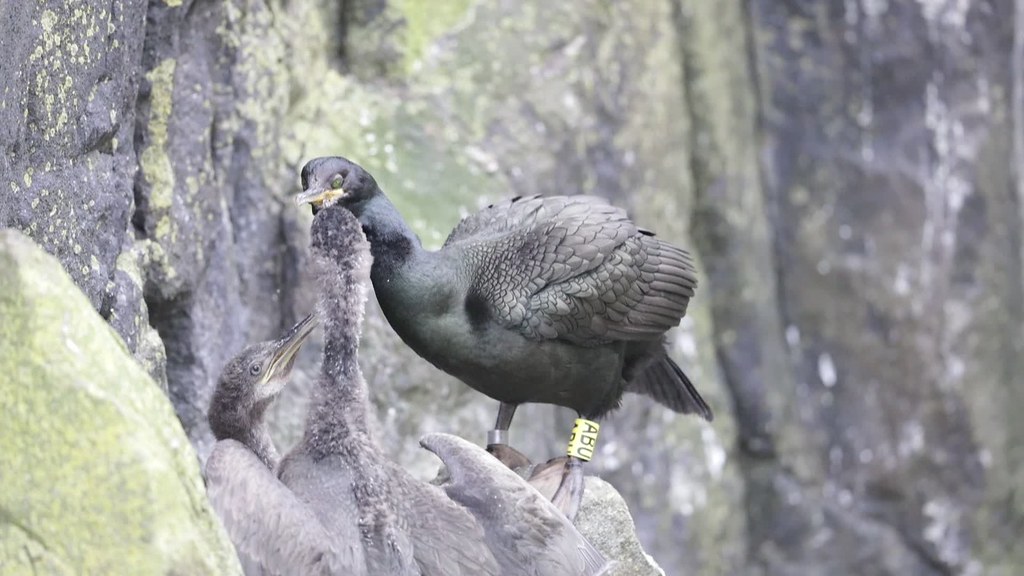
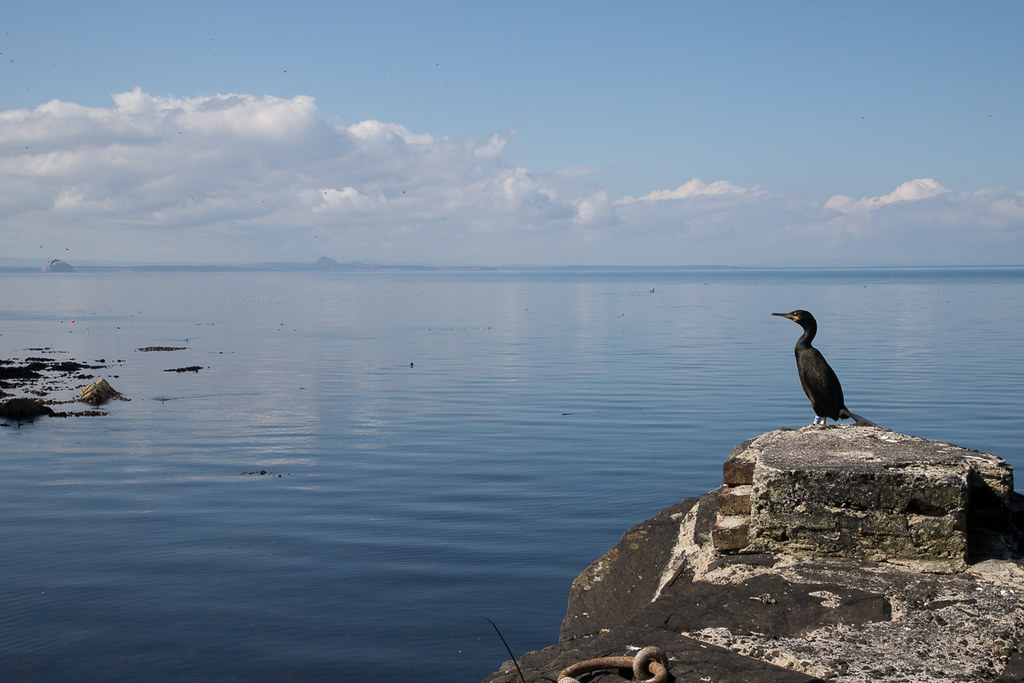
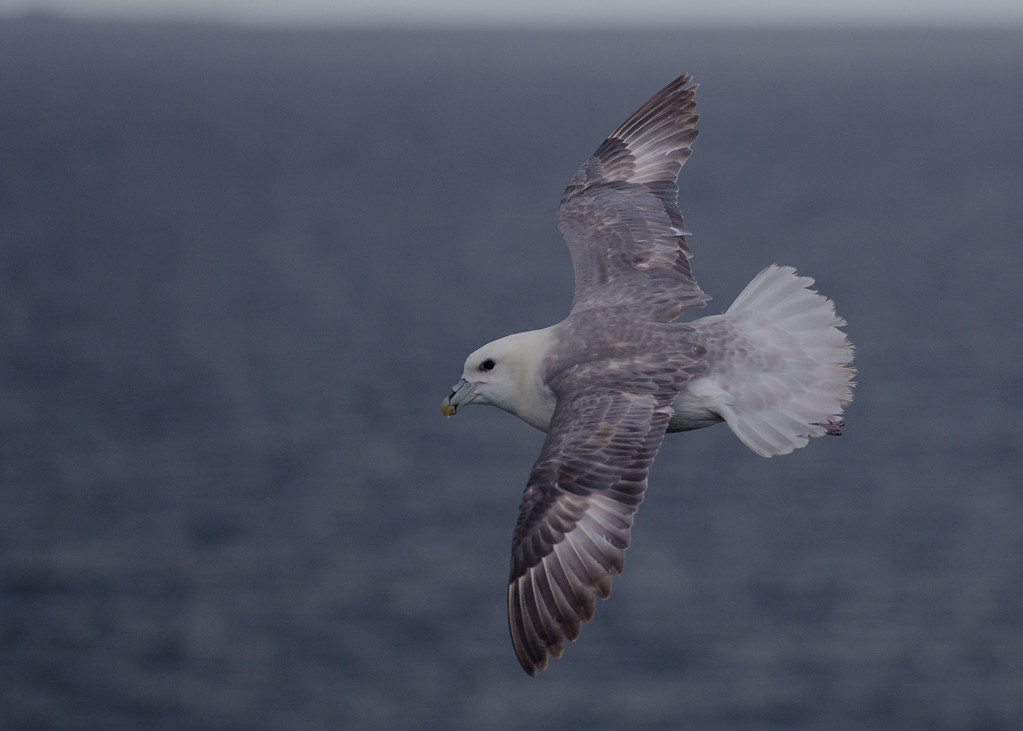
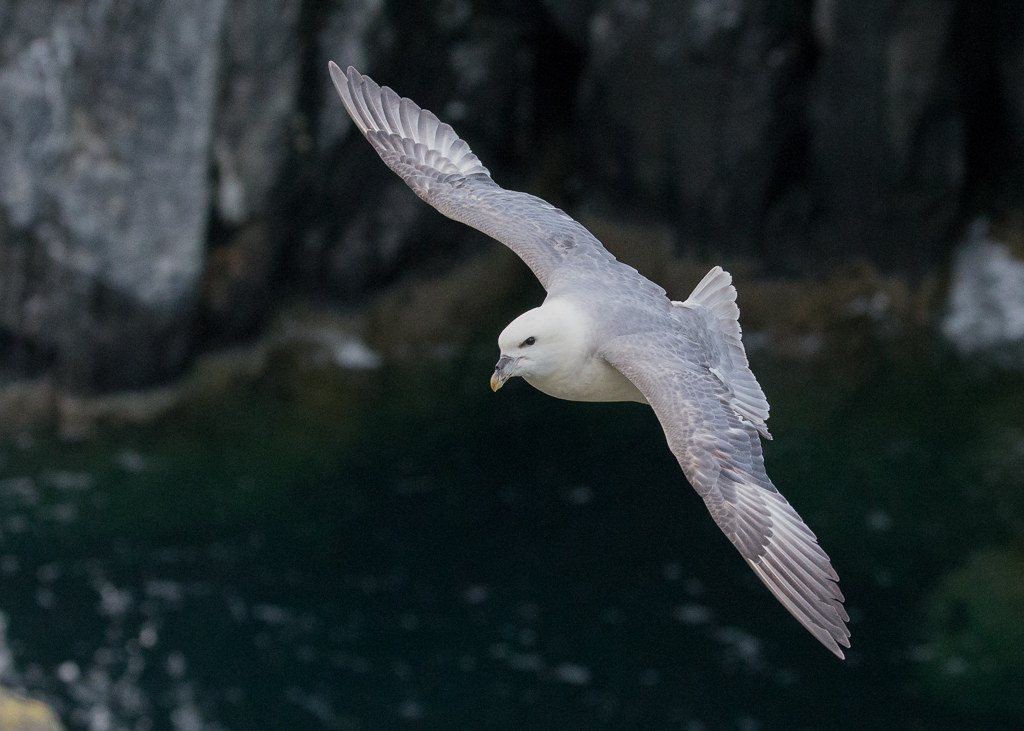
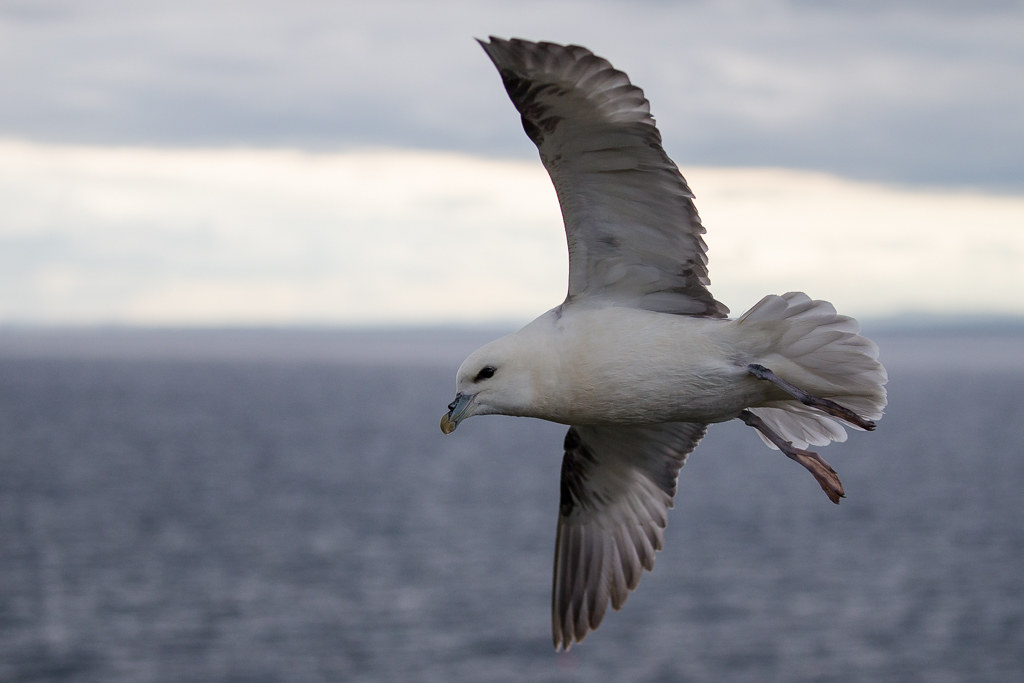
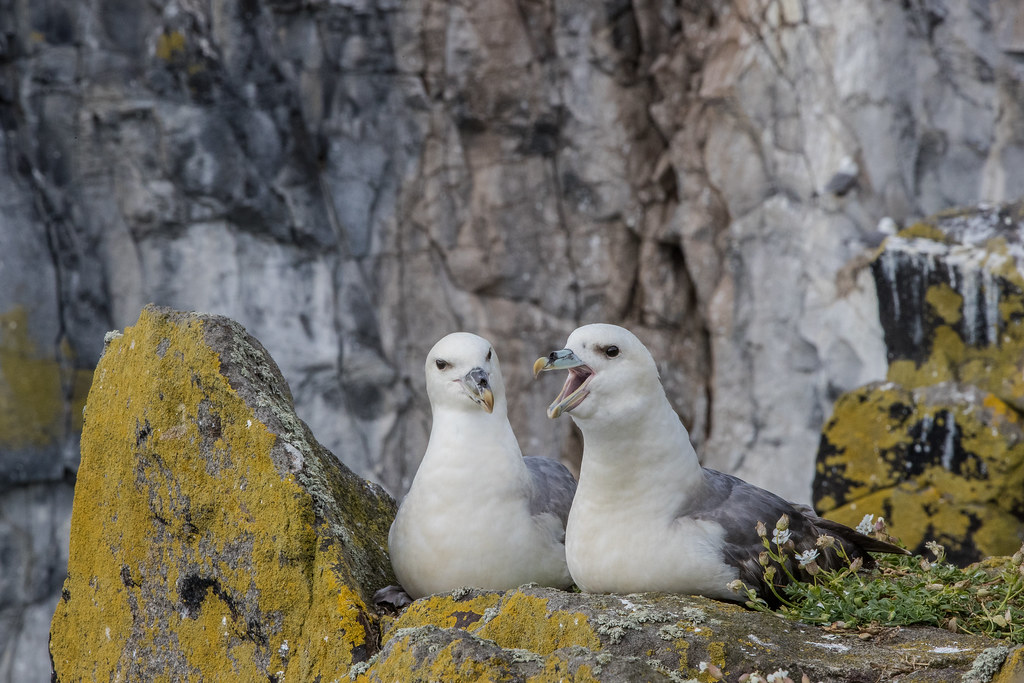
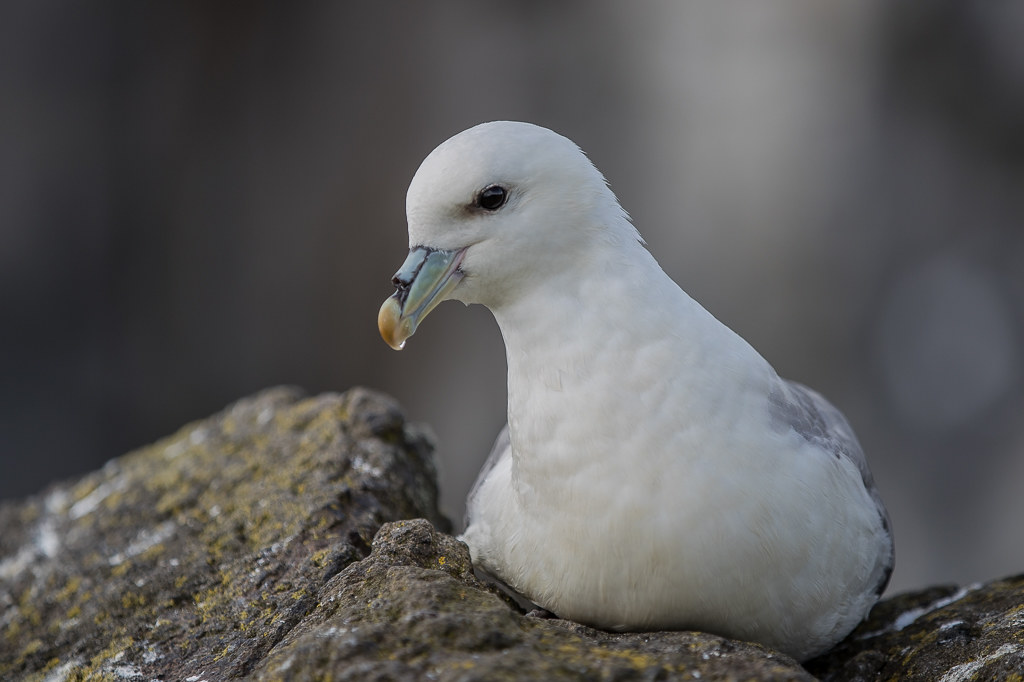
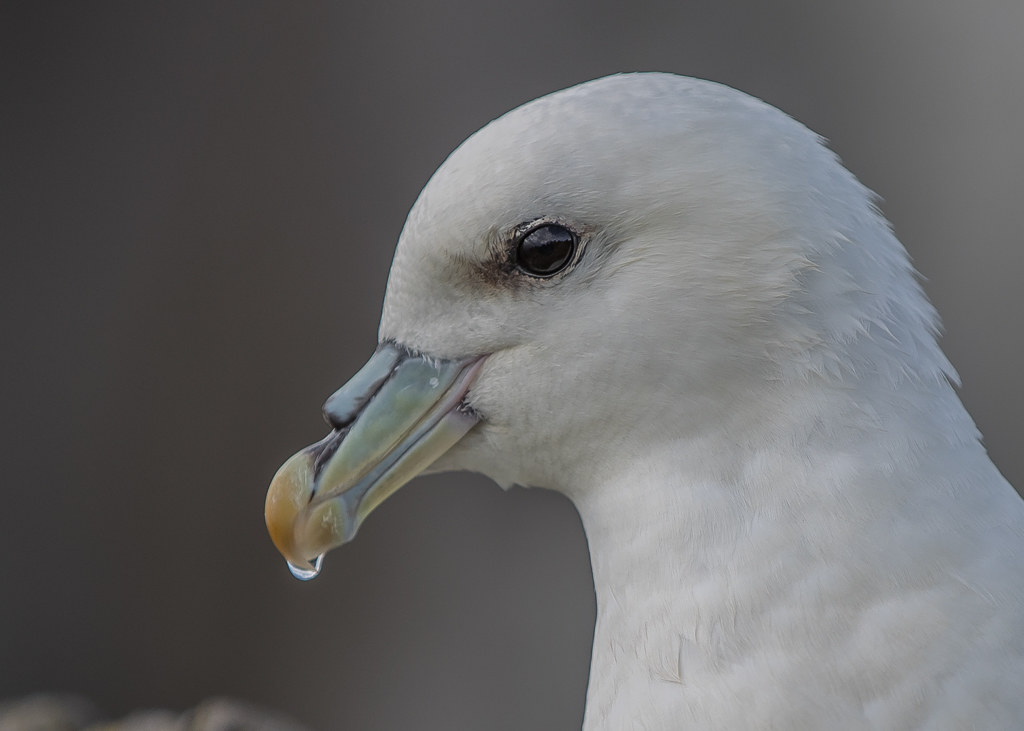
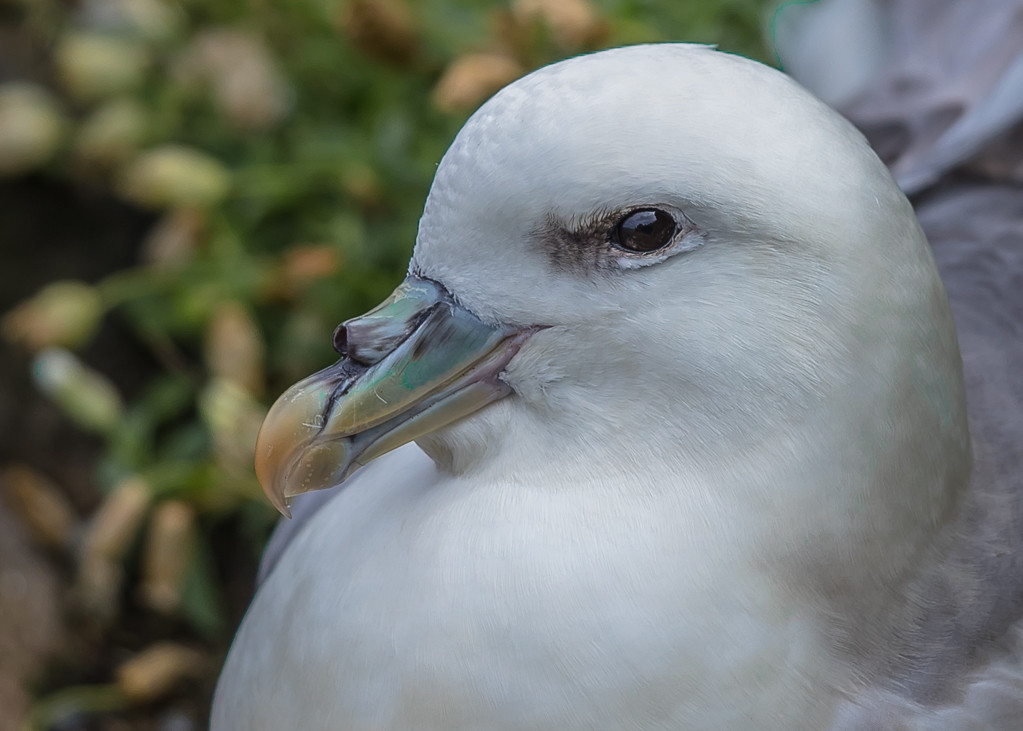
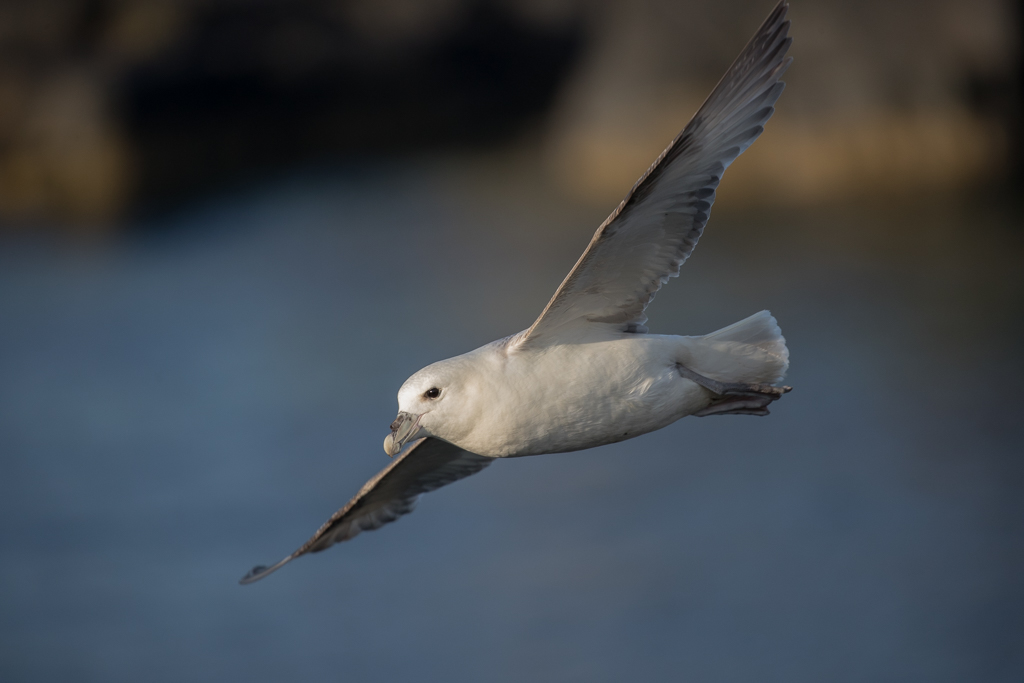
The Isle of May's cliffs, most of which are quite precipitous, are the home for thousands of nesting seabirds during the summer months. The vast majority are Guillemot,Razorbill and Kittiwake although in a more suitable spot the Shags too can be found on the cliffs.
This year the season was running late by a couple of weeks so it offered new opportunities in terms of spectacles to both witness and photograph.
Every year I have been the first place I visit is the stunning view point on the north edge of the island. Sure enough, the Guillemots are there in exactly the same place as last year. I wonder if they are the same birds.
Surprisingly, one is still sat on an egg.
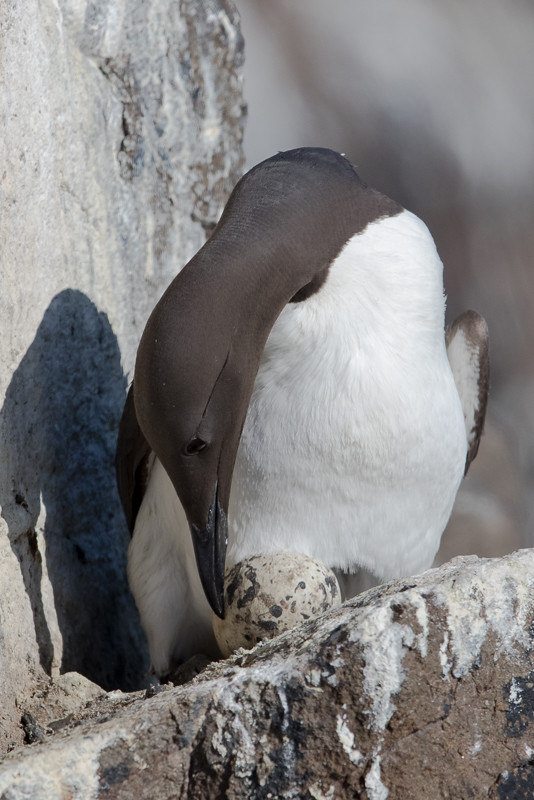 Whereas on the ledge above the chick could be seen, although in the following shot, being well protected by the parent bird.
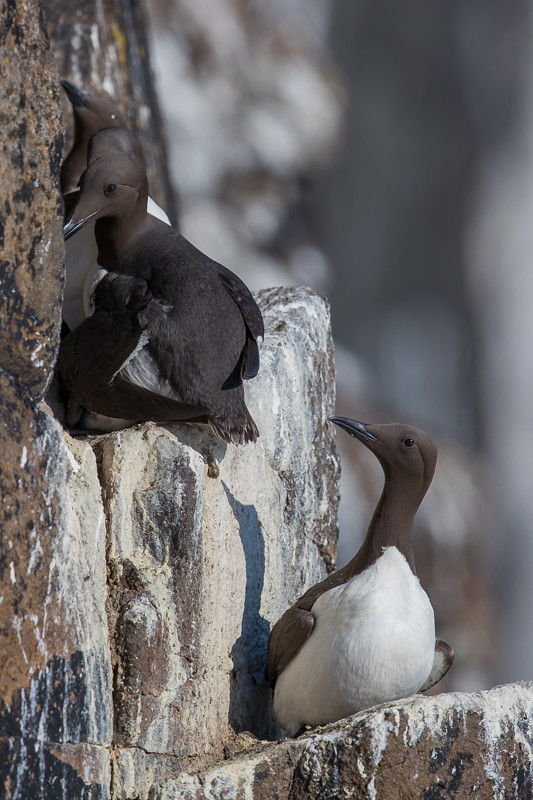 The chicks are extremely vulnerable to predation, particularly from the Great Black-backed Gulls that patrol the cliff face looking for a lapse in security.
Both Guillemots and Razorbills seem very sociable, often huddled together in groups, particularly the Guillemots. It doesn't mean they don't have the odd domestic dispute though!
The chicks are extremely vulnerable to predation, particularly from the Great Black-backed Gulls that patrol the cliff face looking for a lapse in security.
Both Guillemots and Razorbills seem very sociable, often huddled together in groups, particularly the Guillemots. It doesn't mean they don't have the odd domestic dispute though!
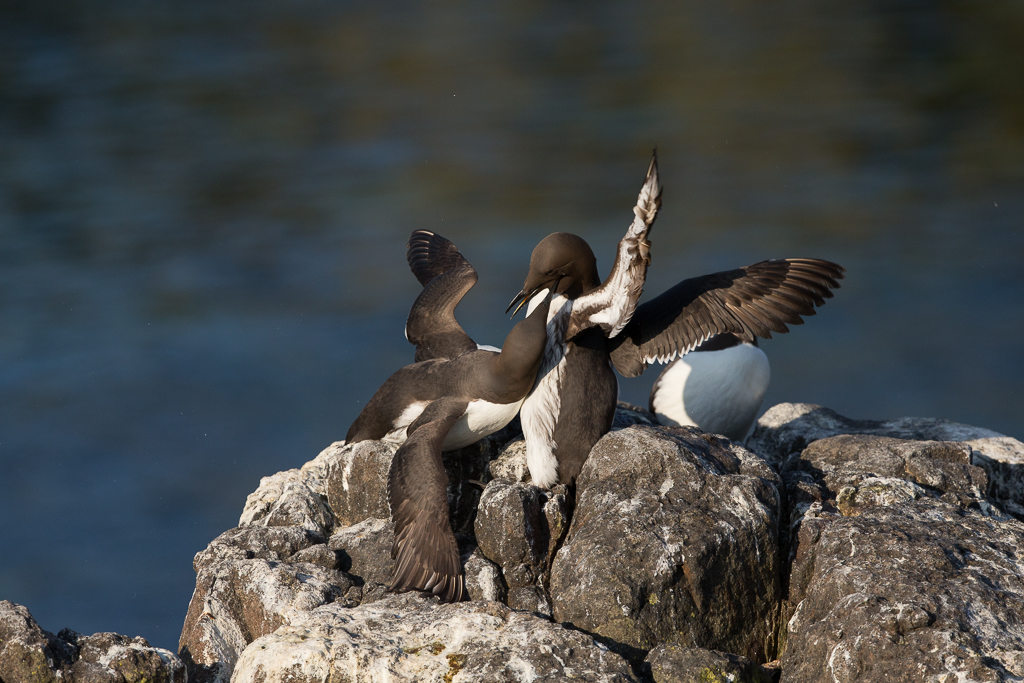 With sharp bills I am surprised that there are no serious eye injuries as a result but calm usually returns quickly and all is well again. They do after all rely on each other to put on a united defence against predation as I witnessed on one occasion when the adults all stood around a chick and won the face-off with a Great Black-backed stood a few feet away.
Occasionally though the older chicks get a little too adventurous and that's when they are so,so vulnerable.
With sharp bills I am surprised that there are no serious eye injuries as a result but calm usually returns quickly and all is well again. They do after all rely on each other to put on a united defence against predation as I witnessed on one occasion when the adults all stood around a chick and won the face-off with a Great Black-backed stood a few feet away.
Occasionally though the older chicks get a little too adventurous and that's when they are so,so vulnerable.
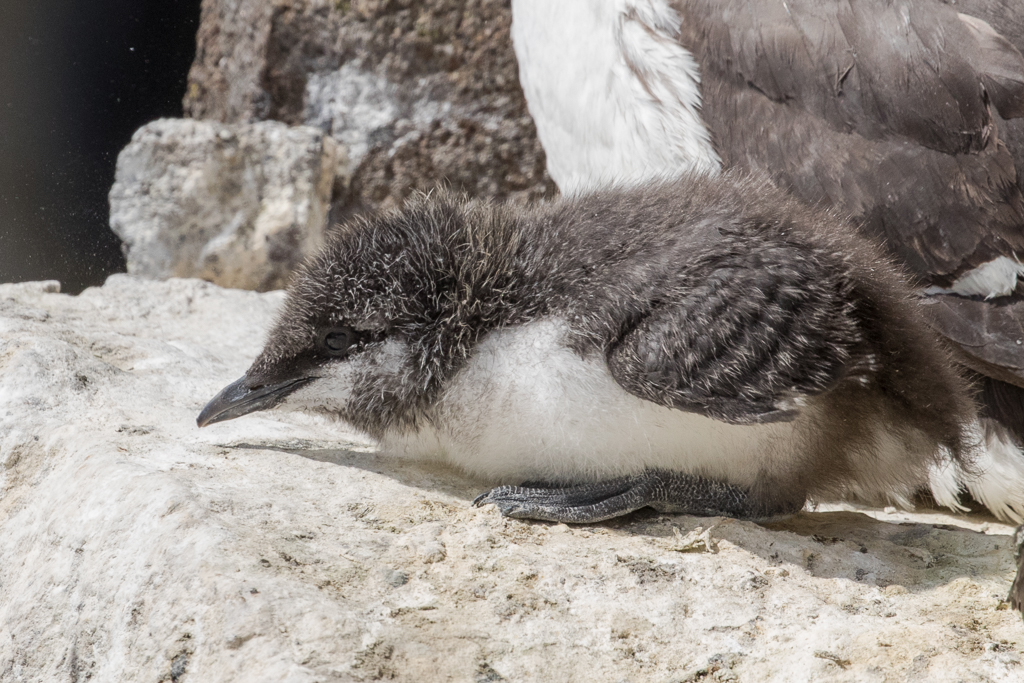 This one was quickly ushered back to safety by a scolding parent, others are not so lucky.
From a food point of view, Guillemots appear to catch one big fish unlike the Razorbills and Puffins which appear to target lots of smaller ones.
This one was quickly ushered back to safety by a scolding parent, others are not so lucky.
From a food point of view, Guillemots appear to catch one big fish unlike the Razorbills and Puffins which appear to target lots of smaller ones.
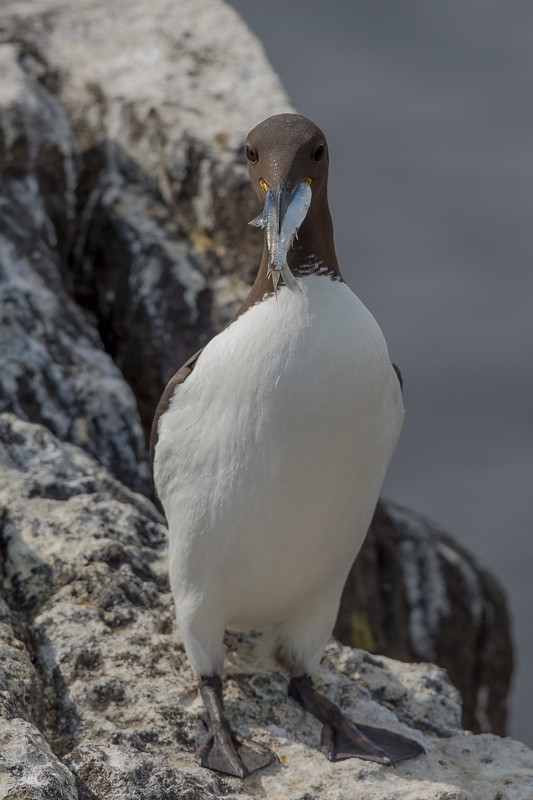 I was amazed just how big a fish a young chick can swallow.
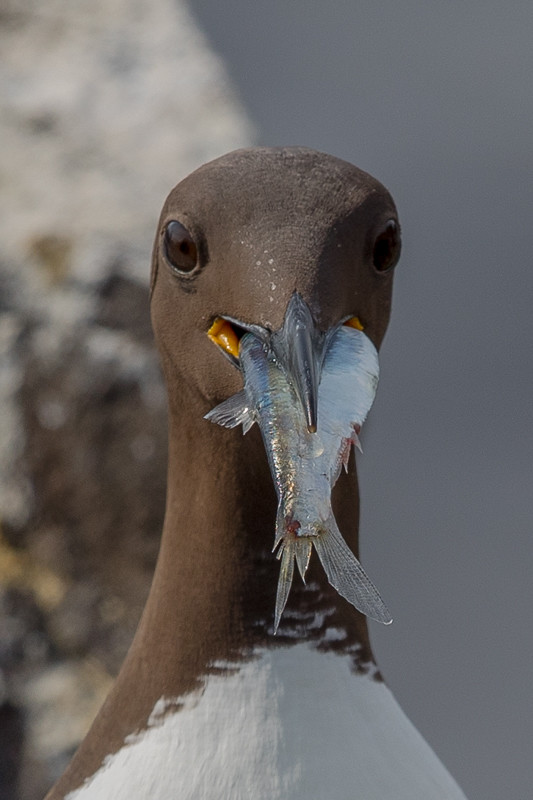 The adults seemed to take the fish to the chick as soon as possible more often than not but on occasions they will parade their fish for quite some time, seemingly boasting of their catch to their fellow neighbours.
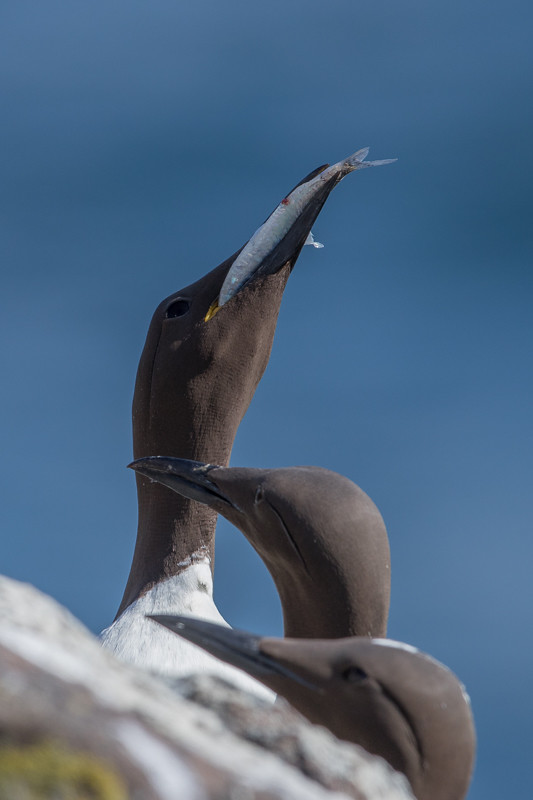 The contrasting colours of both Guillemots and Razorbills make for challenging photography so you have to get lucky with the light to be neither too strong or too dull.
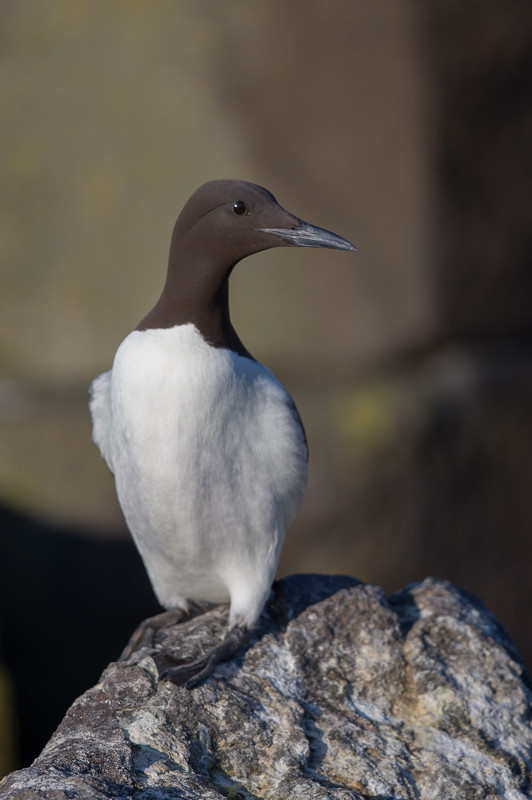 An early sunrise was enough to encourage me to drag myself out of bed at a godforsaken time but once up, it's pure bliss taking in the sights and sounds of the cliffs.
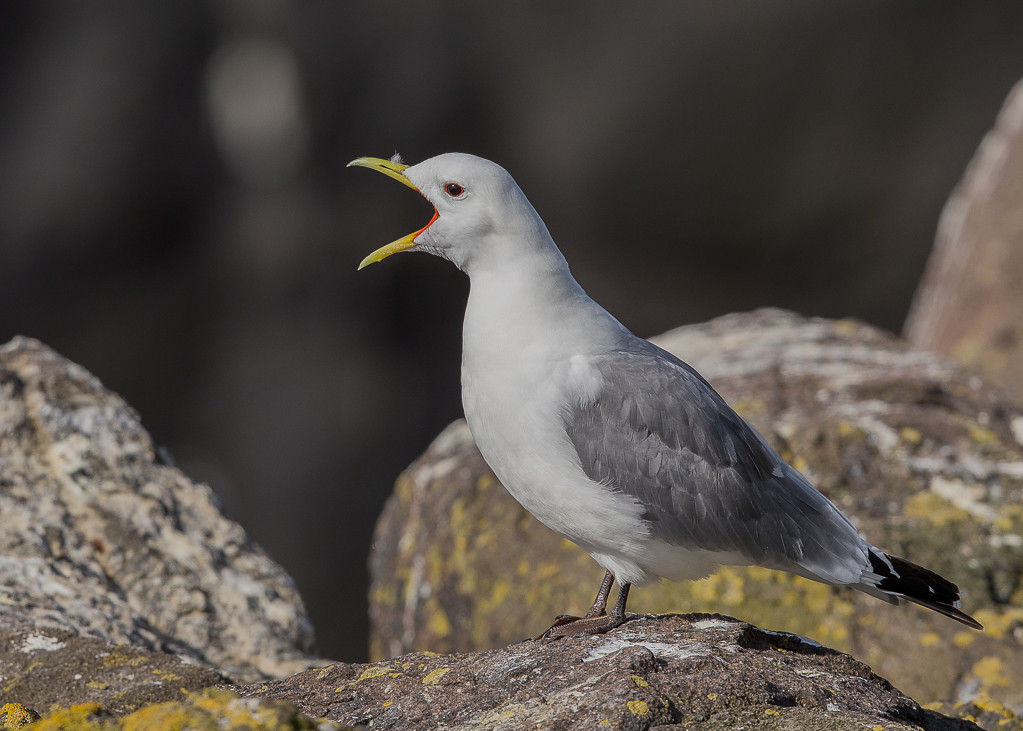
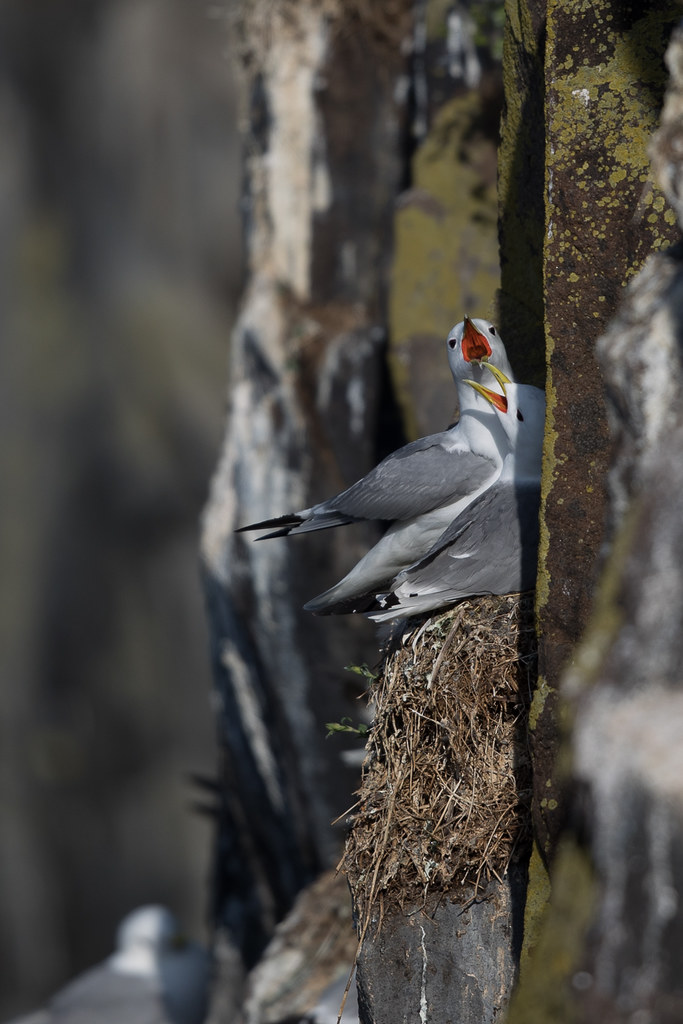
The noisiest bird by far is the Kittiwake. They always announce their return to the nest or perch with their distinctive call.
An early sunrise was enough to encourage me to drag myself out of bed at a godforsaken time but once up, it's pure bliss taking in the sights and sounds of the cliffs.
The noisiest bird by far is the Kittiwake. They always announce their return to the nest or perch with their distinctive call.
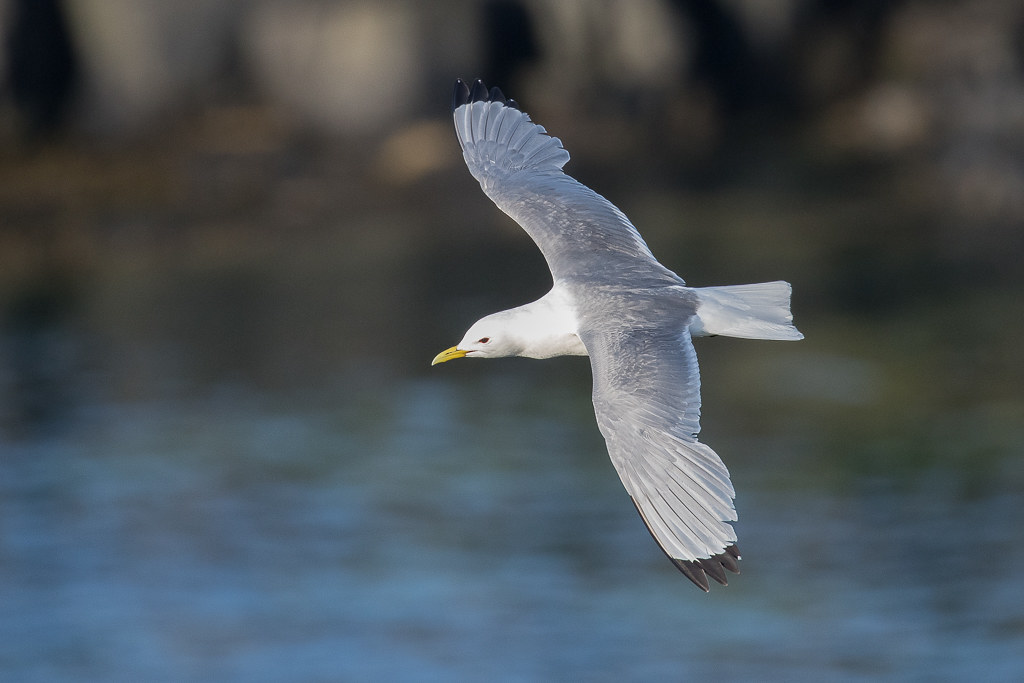
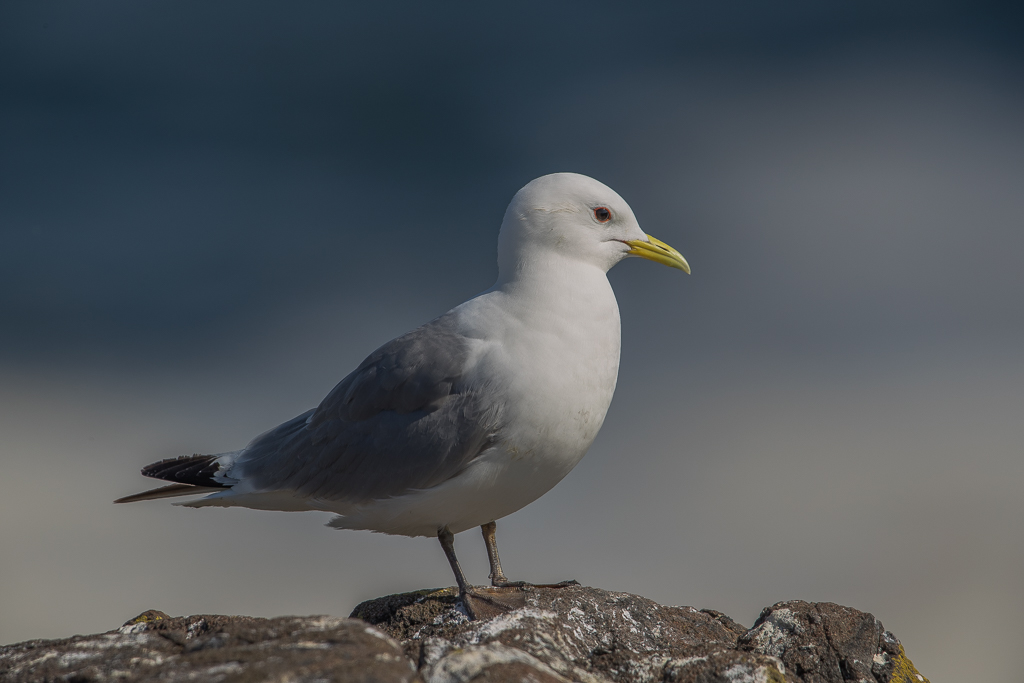
 In flight they are quite delicate in appearance and it's the inky black wing tips which are the obvious identity give away.
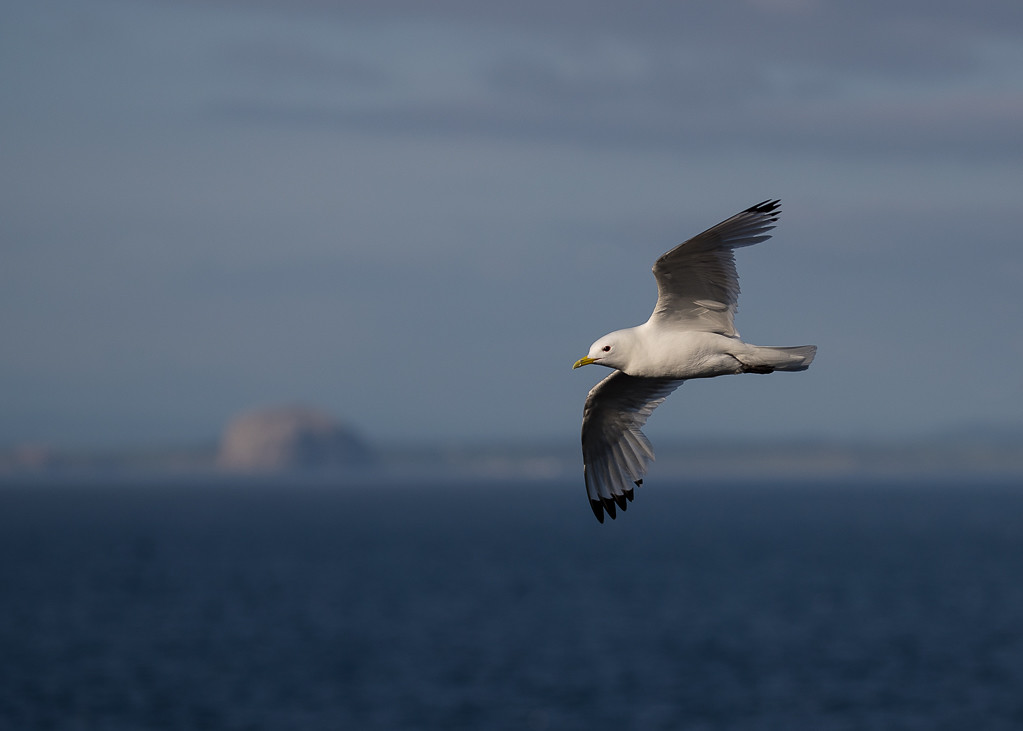
 This one can be seen with Bass Rock, the famous Gannet colony , in the background.
 Kittiwakes build substantial nests and they are usually on cliff faces, never on the ground.
 The chicks remain well hidden by the parent bird for most of the time.
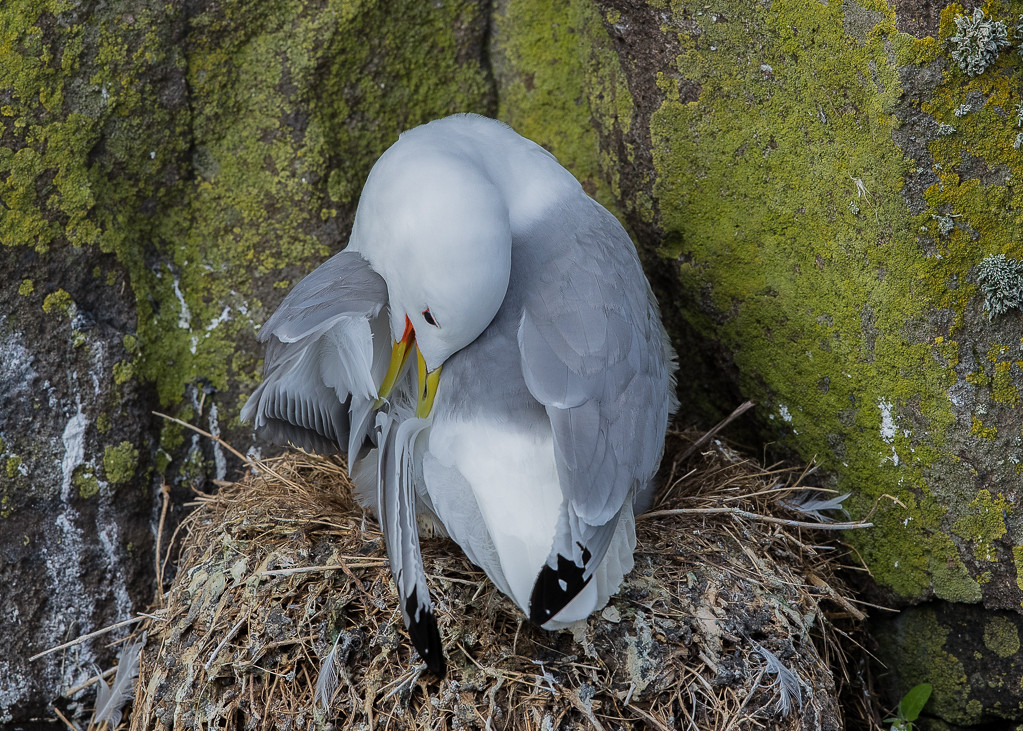 but occasionally you get a good view.
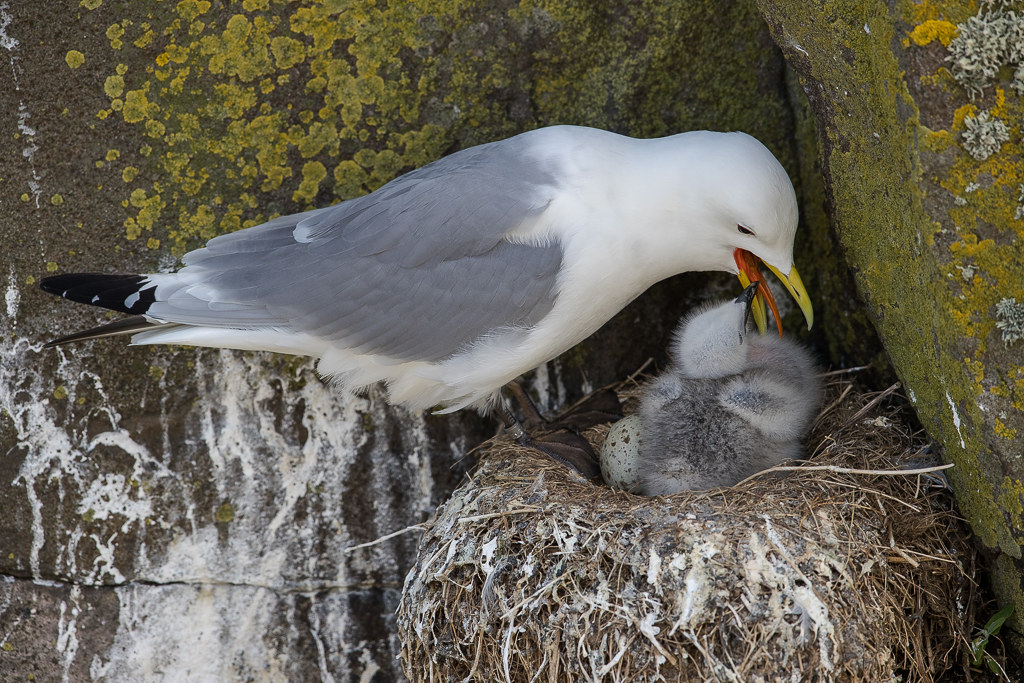 It appears the chick is being fed in a similar fashion to the Fulmars with a liquid being taken rather than solid foods.
I have a feeling the egg in that nest will never hatch. They usually do so within days of a sibling and this one was already 7 days without hatching after I first saw the chick. When there is a big gap in age the older chick apparently often throws it's younger sibling out of the nest so as to have access to all the food. It's a real life and death struggle on those cliff edges and it isn't all the beautiful calm it would seem.
.
It appears the chick is being fed in a similar fashion to the Fulmars with a liquid being taken rather than solid foods.
I have a feeling the egg in that nest will never hatch. They usually do so within days of a sibling and this one was already 7 days without hatching after I first saw the chick. When there is a big gap in age the older chick apparently often throws it's younger sibling out of the nest so as to have access to all the food. It's a real life and death struggle on those cliff edges and it isn't all the beautiful calm it would seem.
.  There was one particular sight I was keen to see. In my previous visits I had never seen a Razorbill with food in it's bill. On my very first morning I got lucky within seconds of arriving at the cliff edge but I was totally unprepared and blew the photo opportunity much to my annoyance.
I thought I was ready should there be a repeat
There was one particular sight I was keen to see. In my previous visits I had never seen a Razorbill with food in it's bill. On my very first morning I got lucky within seconds of arriving at the cliff edge but I was totally unprepared and blew the photo opportunity much to my annoyance.
I thought I was ready should there be a repeat
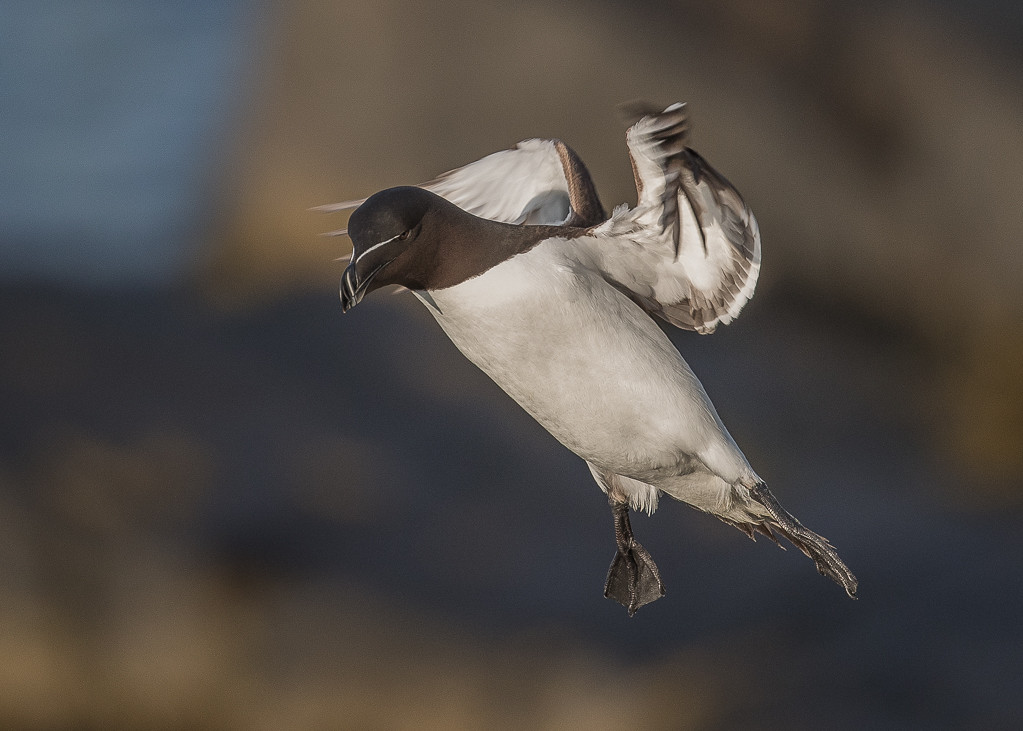 but even at 1/2000th of a second the action is blurred.
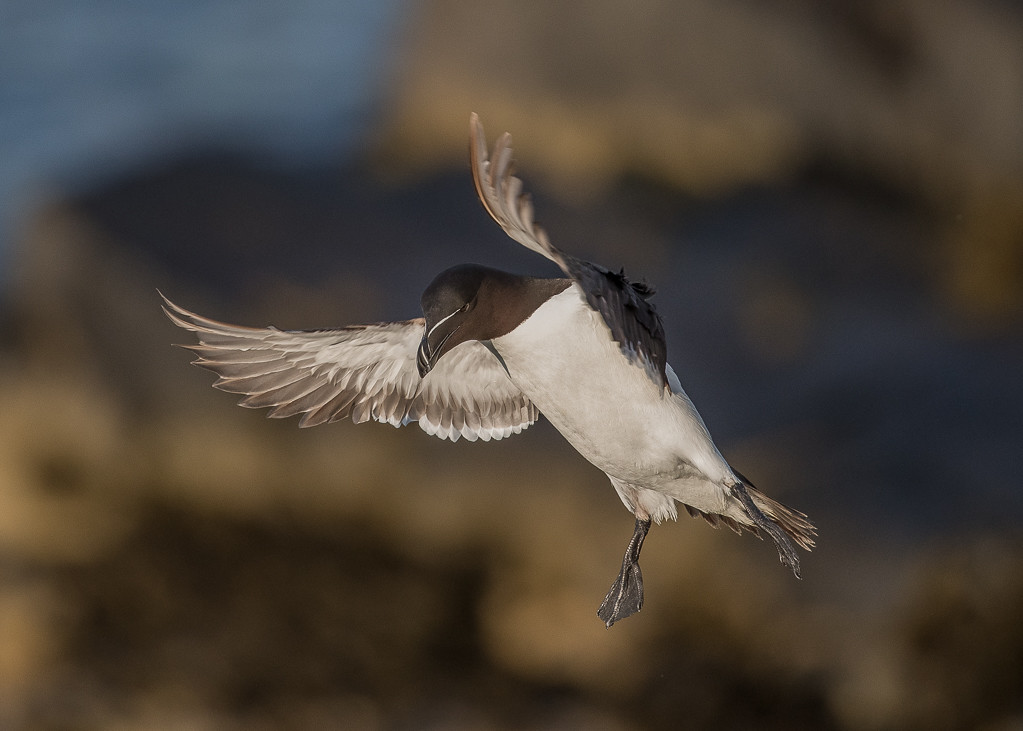 Nothing at first then "bingo".
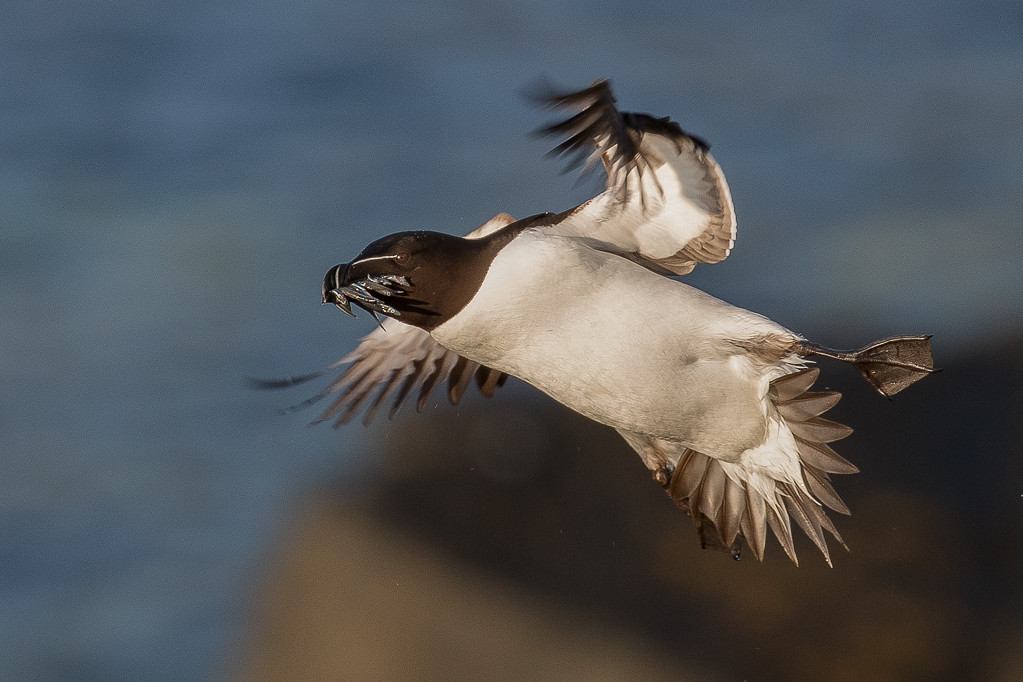 Motion blur can add a bit of atmosphere to a shot.
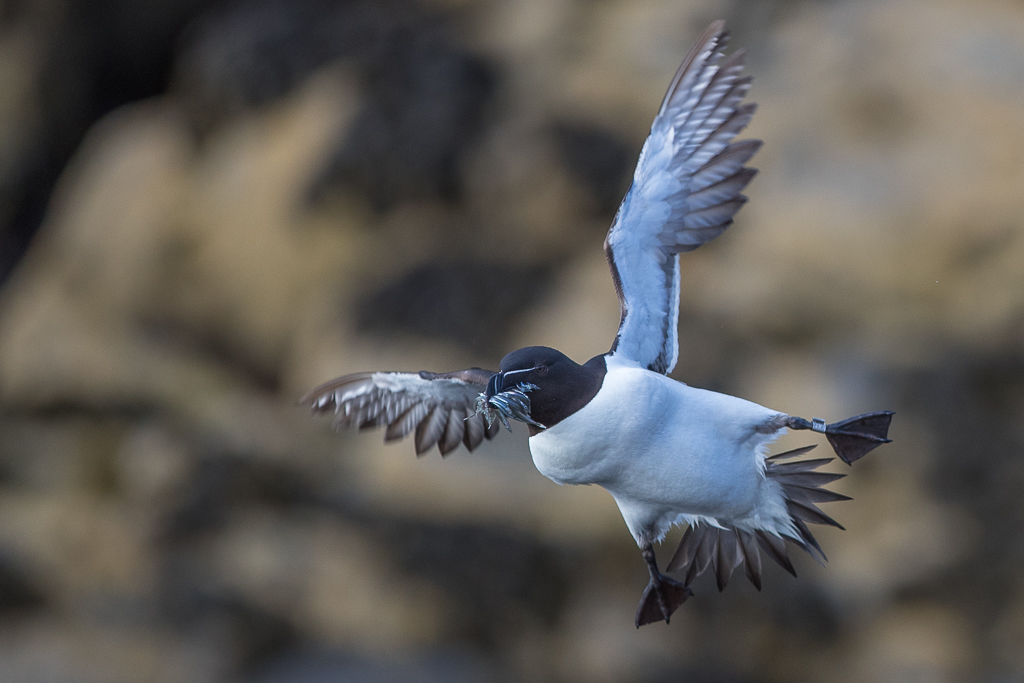 Even at 1/3200 the action isn't totally frozen.
At f2.8 to keep the ISO down, the depth of field is shallow. It doesn't help getting the wrong end of the bird in focus either!
Even at 1/3200 the action isn't totally frozen.
At f2.8 to keep the ISO down, the depth of field is shallow. It doesn't help getting the wrong end of the bird in focus either!
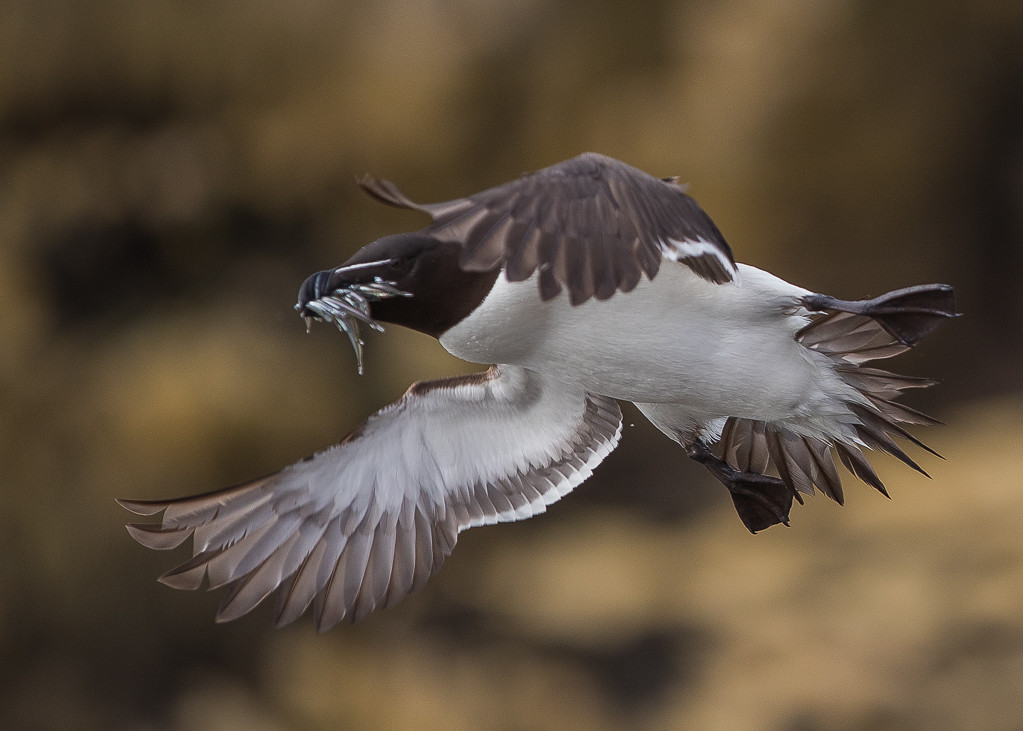 The fun is in the trying though and eventually I got something I was happy with.
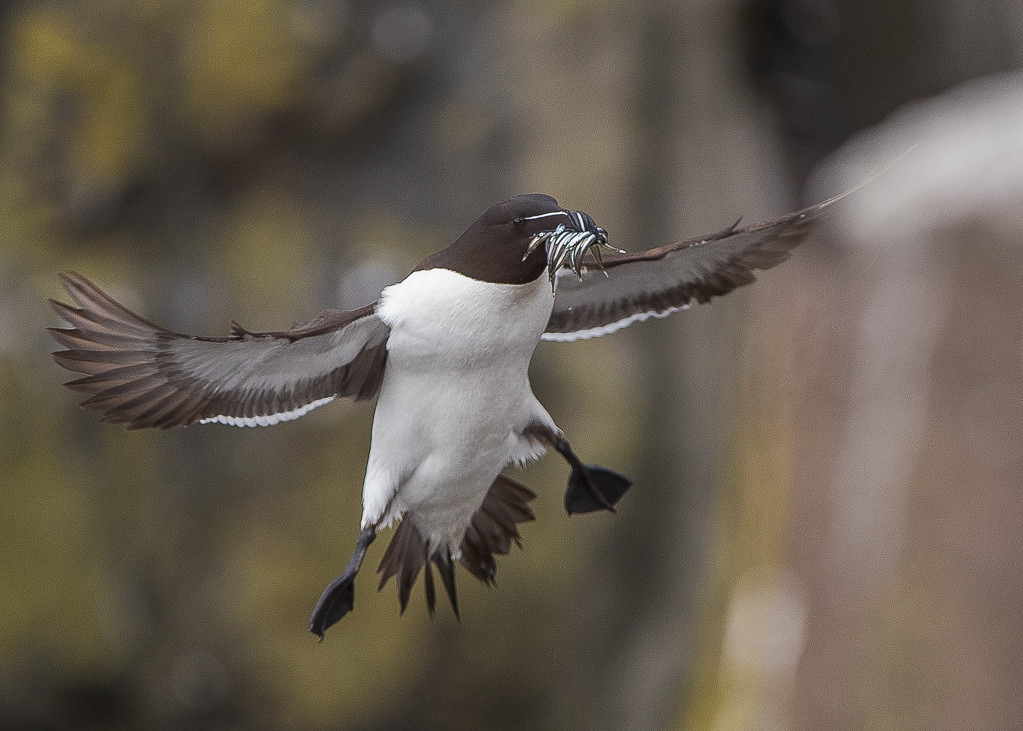 I spent my time chasing Razorbills instead of Puffins on this visit so at least it was a new subject matter to concentrate on. Unlike the Puffins that land a distance from their burrow entrance and stand around waiting for the all clear before attempting to go in, the Razorbills, like the Puffins , make a sweep of the cliff face, sometimes several times, before land almost directly on the nest. As the nests are more often out of view I didn't witness the actual feeding but I did get the view of a bill full of fish before the adult disappeared out of view.
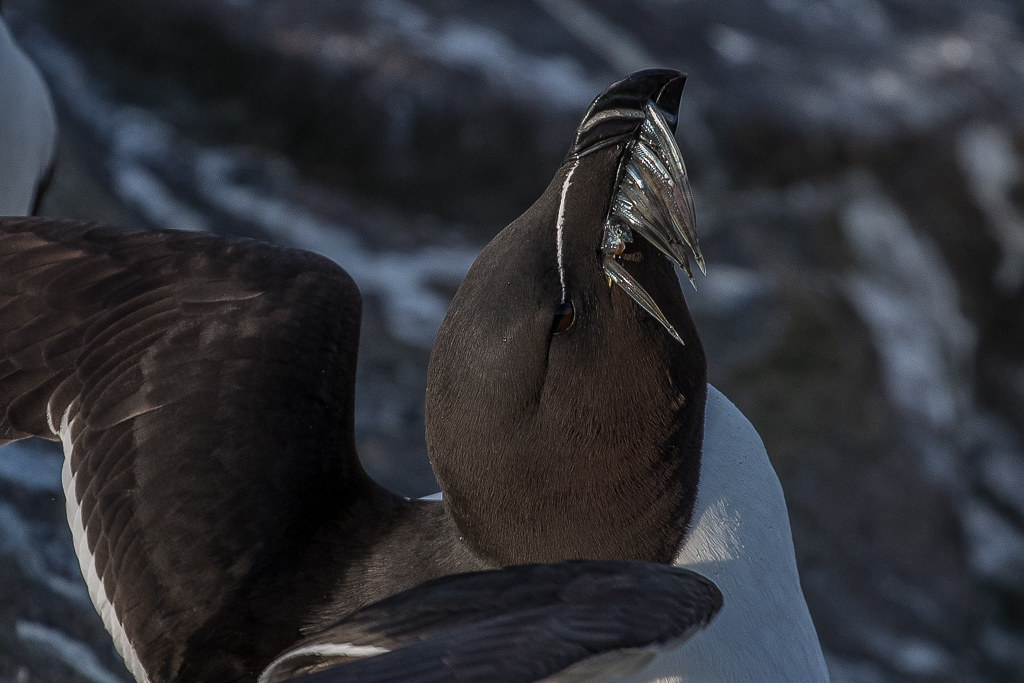 When they are not feeding young the adults appear to gather in sociable groups but usually in smaller numbers than the Guillemots.
Finding a single specimen to photograph is usually easy.
When they are not feeding young the adults appear to gather in sociable groups but usually in smaller numbers than the Guillemots.
Finding a single specimen to photograph is usually easy.
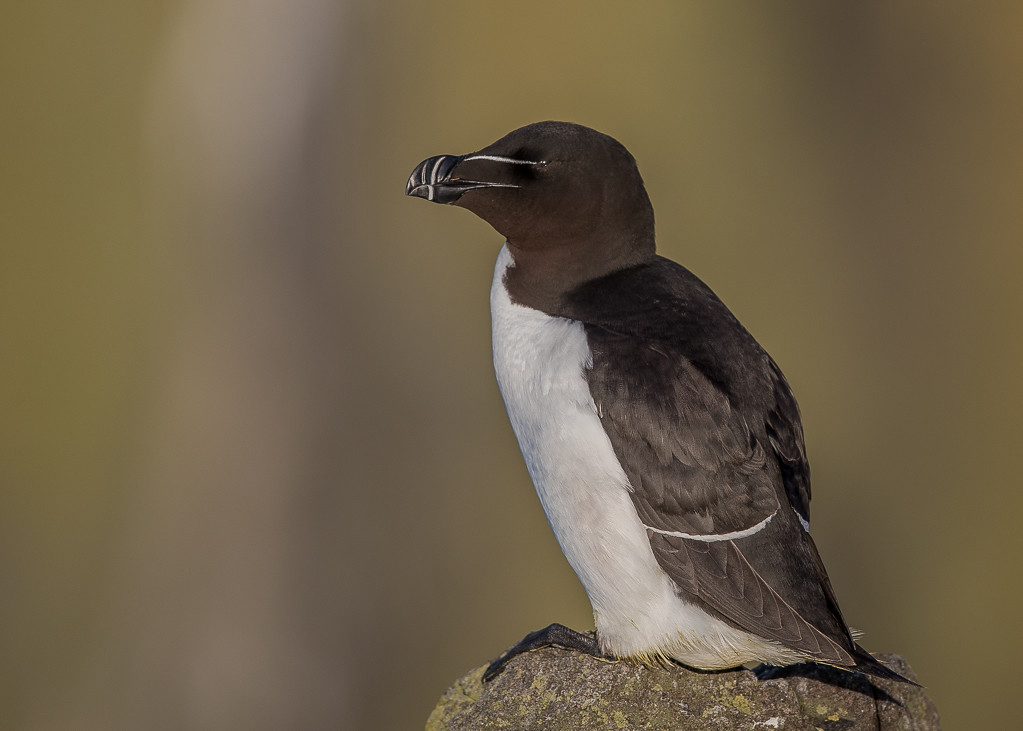 And of course, like the Puffin, the shake down is always a nice event to photograph.
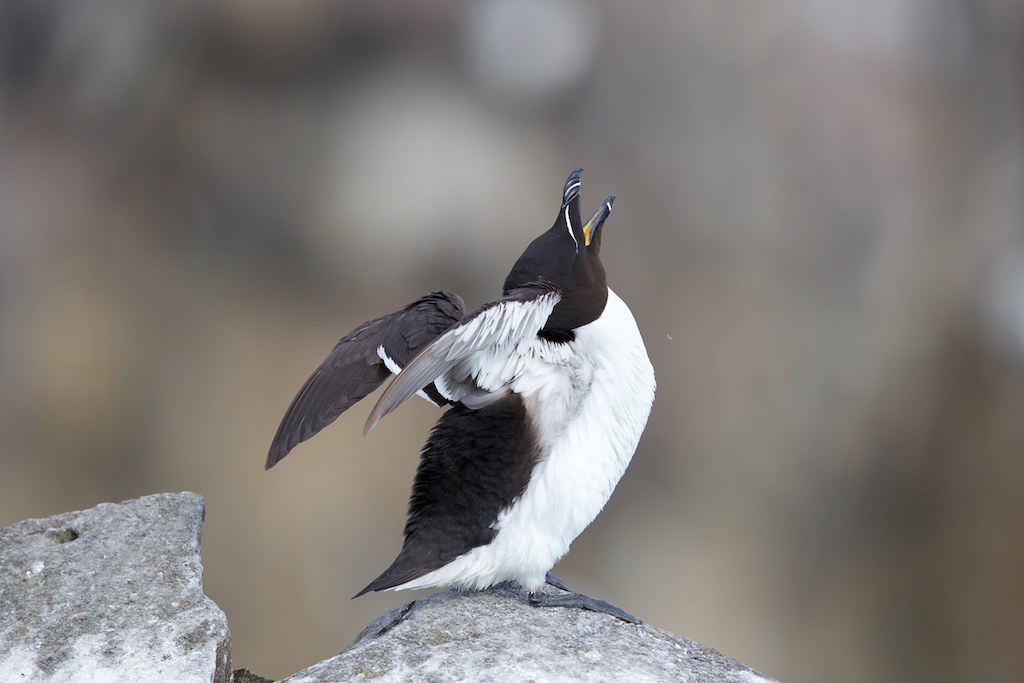 although that contrast of brown and white needs watching. The last shot is straight out of the camera and the whites can be toned down, especially if you shoot in RAW rather than JPEG format.
Without a doubt though amongst my own favourite shots from the whole week were the ones of a Razorbill landing on a cliff edge nearby.
although that contrast of brown and white needs watching. The last shot is straight out of the camera and the whites can be toned down, especially if you shoot in RAW rather than JPEG format.
Without a doubt though amongst my own favourite shots from the whole week were the ones of a Razorbill landing on a cliff edge nearby.
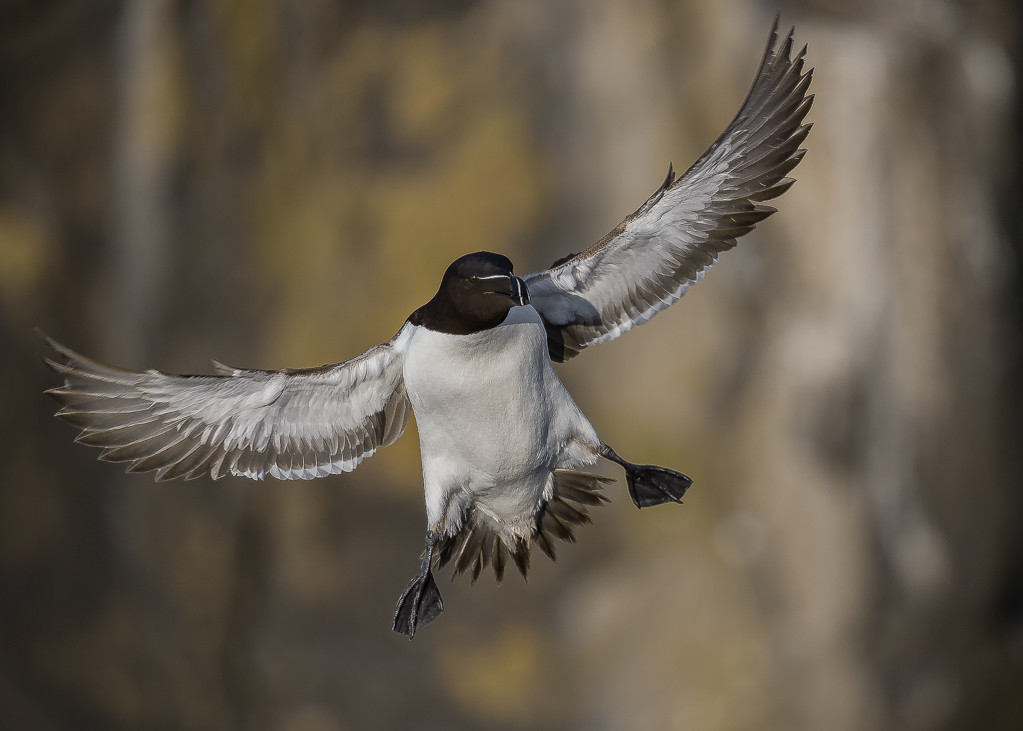 Shame there were no fish included.
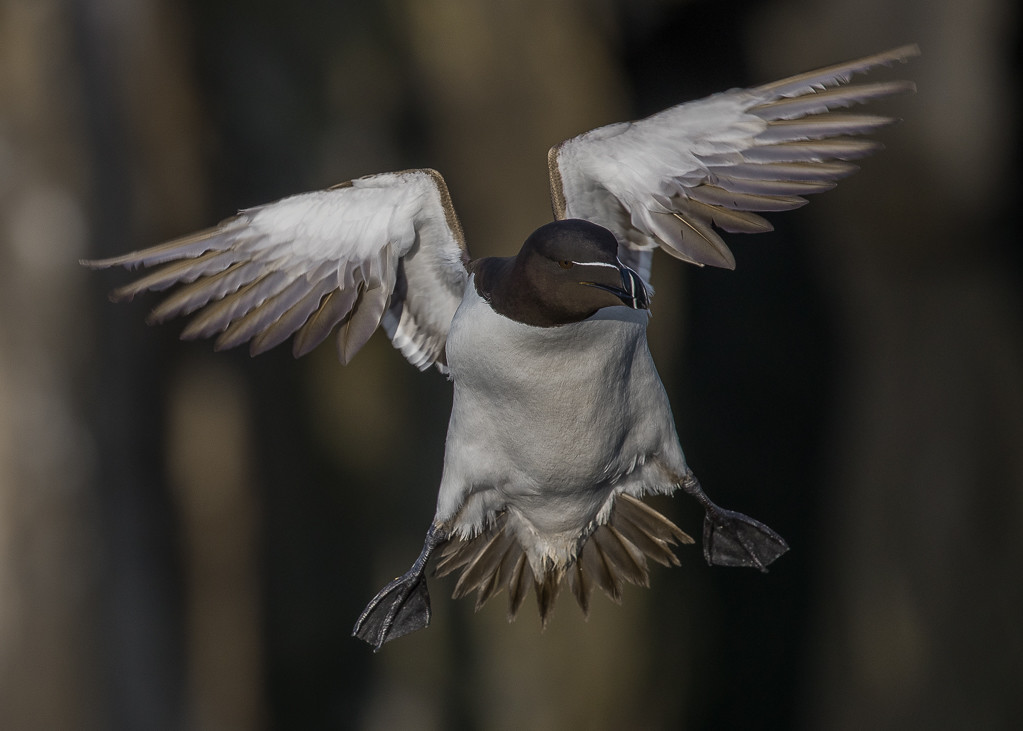 But there has to be something left for next time!
T.B.C.
But there has to be something left for next time!
T.B.C.